
PHOTO
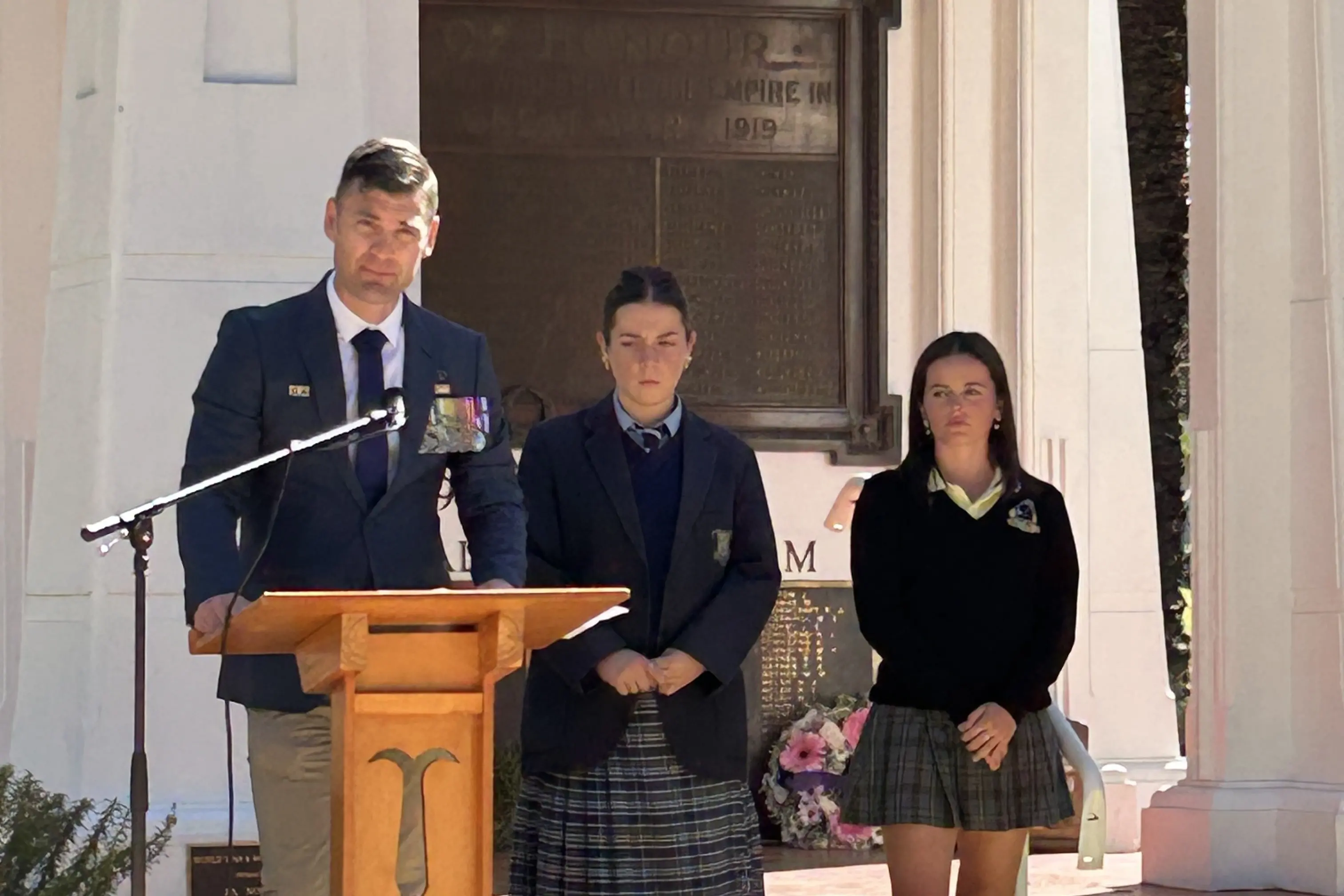
"ANZAC Day speaks of far more than the sacrifice of the soldiers, sailors, and airmen in past wars; it speaks of a national sacrifice that endures to this day."
Oliver Ellis's words gave focus to commemorations in Eugowra, as the community gathered for the mid-morning march and service at Memorial Park.
We share his address here ...
It is a true honour to stand here today - among veterans, families, and members of this community - on a day of deep reflection, shared remembrance and significance to our national identity.
ANZAC Day is a day where we stop. We pause not just to remember names or battles, but to honour something greater: the values on which our nation was founded - the spirit of service, mateship and sacrifice.
Sacrifice is what I would like to leave you to consider today, it’s forever entwined with the Australian identity and it’s the key to our continued enjoyment of this way of life. Nothing speaks to sacrifice more than ANZAC day.
In an age of divisiveness - self-expression over social cohesion, individualism over community, ANZAC Day represents common ground.
It’s a moment to pause and reflect on the way of life we so often take for granted in our country and acknowledge the shared history and continued effort that it requires to continue.
It is the annual reminder of the sacrifices already made and those that we must all continue to make so we can continue to enjoy the freedom we currently have.
We honour the ultimate sacrifice made by so many, but these continued and wider sacrifices are something we can all relate to.
These are the sacrifices of careers, ambitions, aspirations, dreams and futures.
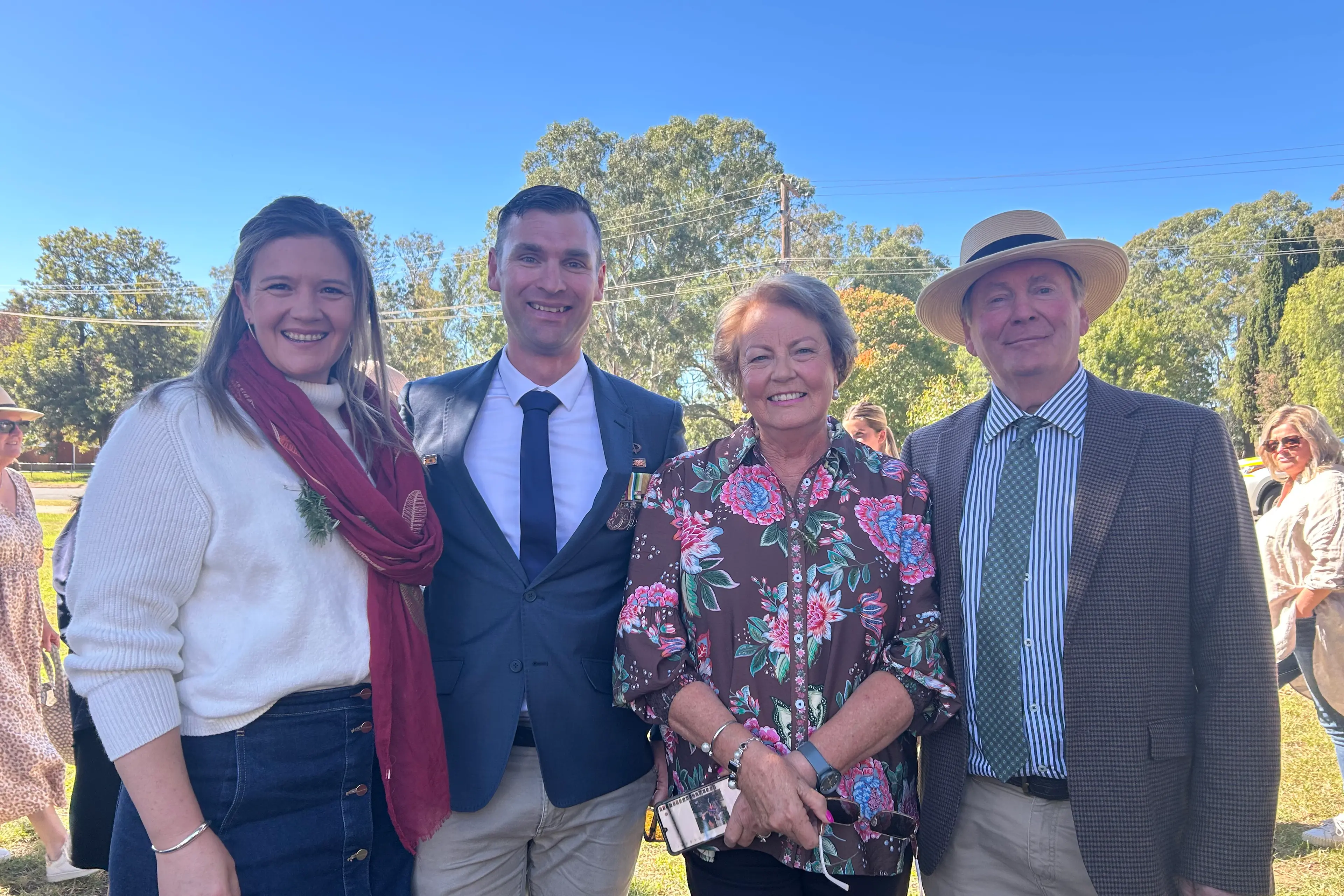
They are the spirit that is burnt into the very fabric of Australian society, and I see it in my own family history - my grandmother worked in a factory making artillery shells during the Second World War - she might not have served overseas but she sacrificed her youth and career aspirations and remained unmarried until well after the war had ended.
It’s recognition of a wider sacrifice that we see similarly in the student who forgoes their schooling to toil on the farm as their fathers and brothers deployed to unknown lands in the second world war, just as vividly as the farmer conscripted to National Service and deployed to Vietnam.
ANZAC Day speaks of far more than the sacrifice of the soldiers, sailors, and airmen in past wars; it speaks of a national sacrifice that endures to this day.
I have had the opportunity to experience this sacrifice first-hand and appreciate its ongoing legacy.
Though my service was relatively brief, I had the good fortune of serving during one of the highest tempo operational periods in recent Australian history as part of the Global War on Terror.
I joined the Army out of university on a Special Forces direct recruitment scheme – a scheme that continues to this day and has produced some of the finest soldiers that have served over this period - a mix of professionals, tradesmen, and farmers ... you betcha.
I was fortunate to navigate the initial military courses, commando selection and training, and was deployed for my first combat rotation to Afghanistan in early 2008.
My unit had already suffered casualties by this stage, the first commando killed in action occurred during my pre-deployment training.
Luke Worsley was the first of 15 soldiers killed serving with a Commando element - roughly 36 per cent of the 41 total Australian fatalities for the Afghanistan war, with many more injured.
For me, that first deployment was many things: it was exciting, it was scary, it was anxiety about how I’d react in combat for the first time, it was adrenaline, it was a lesson in sleep deprivation and the endurance of the human body, it was mateship in its purest form, it was naivety to the true nature of war and it was sacrifice.
Sacrifice that extended far beyond my own personal bubble. While I was deployed, my father, Hugh, gave an ANZAC day address at Bogan Gate.
He spoke of a feeling that is universal to every generation of parents waiting for news from the front, and to quote his address directly –
"As parents, you do live with a daily fear for your deployed loved one. It doesn’t stop your heart giving a flutter each time the phone rings at an odd time, or you hear the area where Oliver is mentioned on the news. We pray for his safe return and that of all deployed personnel.”
This is a "heart flutter" that bridges the decades; it’s the sacrifice of the family, friends and communities of those deployed, and it is the same heart flutter felt by mothers in 1916 waiting for a telegram, or wives in 1968 watching the evening news.
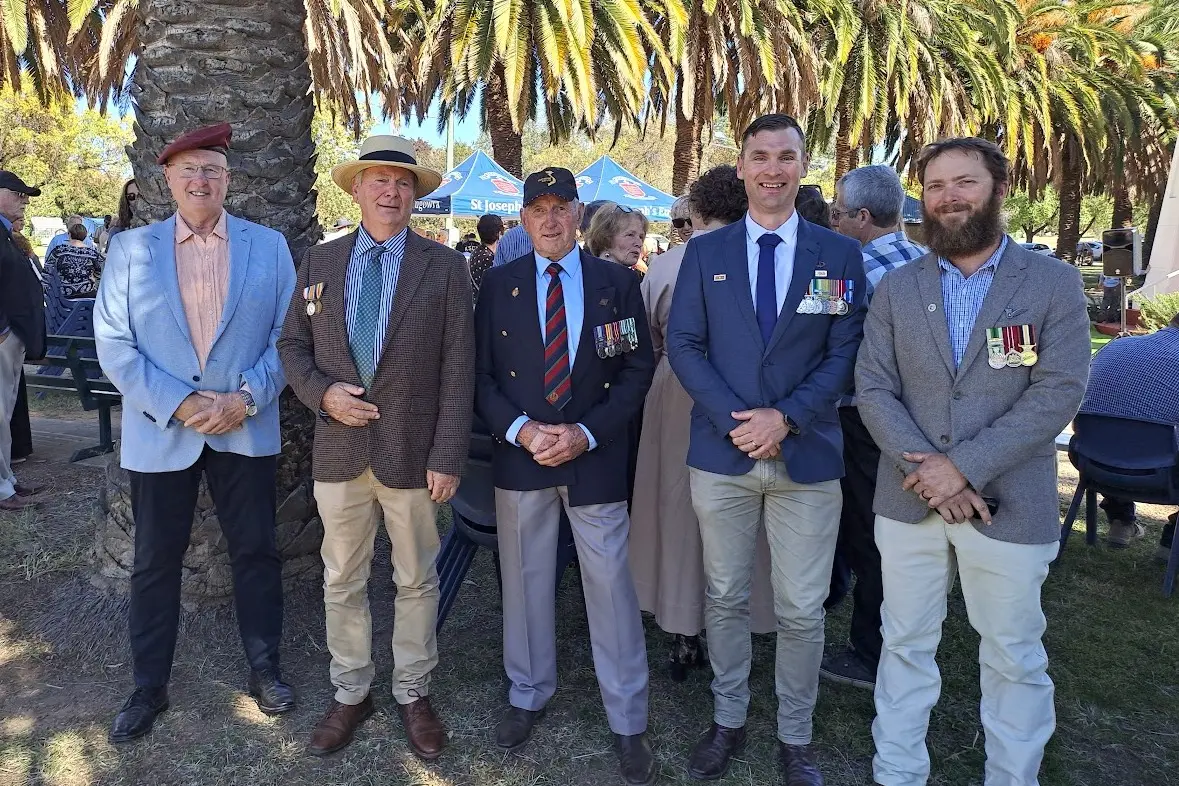
It draws us to the heart of ANZAC Day: the communal sacrifice that is the realisation that the cost of war is paid in the currency of human lives and family peace.
For me this was never more apparent than on Sunday, April 27, 2008 - just two days after we had commemorated ANZAC Day at our base in Tarin Kot.
During a clearance and disruption operation, my vehicle-mounted platoon was ambushed by a well-prepared and fortified insurgent element. Jason Marks was shot and killed, and a further four Commandos were wounded by small-arms fire - at the time, the most significant casualty event for Australia since Vietnam.
"Marksy" and I were not especially close; we worked together in a platoon of 30 guys, though were in different teams and at different stages of our careers, though he was a great mate to many, a contributing member of his local community in Yepoon, a loving husband, and a doting father to two young children.
He was an Australian soldier, and his name is now etched on the war memorial wall in Canberra along with the 103,000 other Australians who have made the ultimate sacrifice.
A sacrifice that is wide-reaching and just as visceral and contemporary today as it was for the young Australians and, their families, who silently paddled onto Gallipoli beach in the dawn hours of April 25, 1915 , or who crawled through the mud of the Western Front , who battled the dust of Tobruk, who stalked through the hills of Kokoda, or who suffered through the rain and terrors of the jungles of Vietnam.
There is a direct line of wider sacrifice that follows from those shores in 1915 through to our modern deployments in East Timor, Iraq, Afghanistan, and beyond.
Though I was to deploy to Afghanistan a further five times, for tasks ranging from two weeks to five months, it is a sacrifice that sticks with me.
It is a poignant reminder of what ANZAC Day means now, what it has meant for our previous generations, and what it will continue to mean for our children.
It's recognition that the sacrifices of war and the price of our way life extends far beyond the deployed soldier, sailor and airman, it is the Australian sacrifice, and one we can all relate to.
Unfortunately with the global uncertainty and wars raging abroad currently, the domestic threats arising regionally in the South Pacific and the near inevitability of history repeating, ANZAC day is a reminder that our sacrifices are not over. Australia would do well to look to communities like Eugowra, who have endured so much over the past few years and have demonstrated what resilience and sacrifice look like – a testimony to our enduring ANZAC heritage.
In recognizing this, we also acknowledge that for every generation of Australian soldiers, the war doesn’t always end when the uniform comes off.
Many returned servicemen carry wounds we cannot see, their personal sacrifice continues, as does that of their families. For those to which this resonates, you are not alone, we are here and you matter. If this is you, please reach out.
As we take a moment to pause, I would like to acknowledge all of my fellow service members, past and present, their families, their friends, their communities and acknowledge the sacrifice of all.
In particular, as we reflect on all of those Australian and New Zealand soldiers who gave their tomorrow so that we could have our today, I remember Jason Marks and am reminded of the words in the Gospel of John: "Greater love hath no man than this, that a man lay down his life for his friends."
Lest we forget.