A wet end of autumn and early winter has improved conditions across the Forbes district, with rainfall in the first six months of 2026 almost matching the total recorded for all of last year.

Forbes Airport recorded 70.6mm of rain in June, following a particularly wet May that delivered 102mm.

That has pushed the year-to-date rainfall total to 327.4mm, just shy of the 342.8mm recorded at the Bureau of Meteorology’s official weather station across the whole of 2025.

The turnaround comes after a dry summer and has been enough to significantly improve the region’s drought outlook.

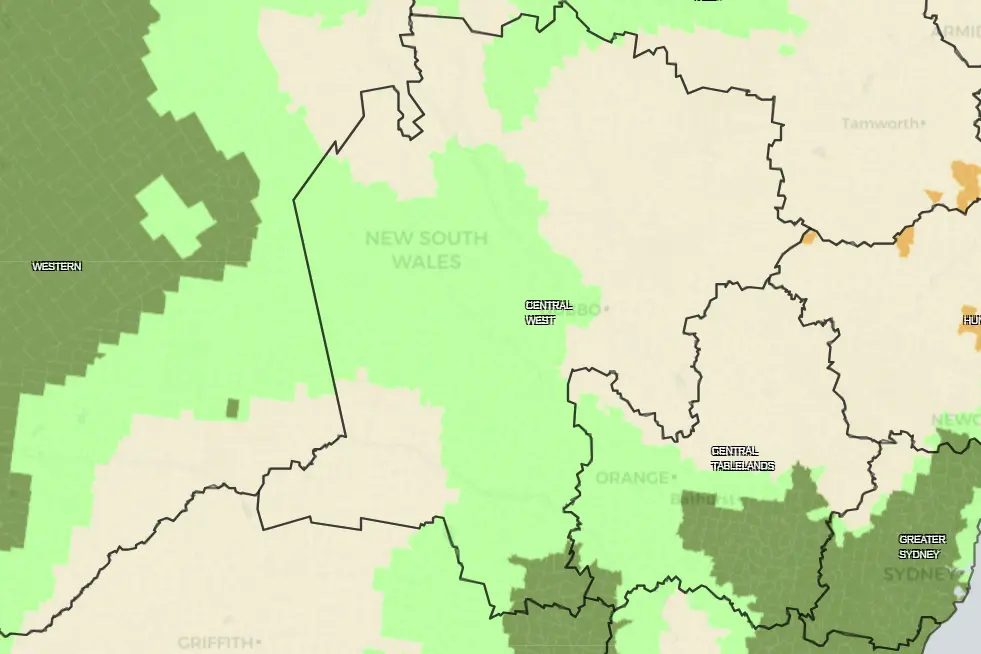
According to the Department of Primary Industries and Regional Development’s Combined Drought Indicator, 98.2 per cent of the local area is now classified as being in drought recovery.

Forbes had been listed as drought-affected since July last year.

The latest drought map paints a much brighter picture across central west NSW.

Grenfell is now rated non-drought, while areas east of Forbes, including Eugowra and Canowindra, are considered to be in recovery.

Similar conditions extend north to Parkes and Peak Hill.

To the west, Jemalong is also rated in recovery, although Condobolin remains classified as drought-affected.

Temperatures have also been running warmer than average, a trend the bureau expects to persist through the coming months.

Forbes Airport has recorded only two sub-zero mornings so far in 2026, both occurring in April.

The coldest winter morning to date was 1.1 degrees on June 8, while the coldest day of winter so far was June 5, when the temperature reached just 11.3 degrees.

Looking ahead, the Bureau says daytime temperatures are likely to remain warmer than average across all areas south of the tropics.

Overnight temperatures are also expected to be above average.

Forecasters say the recent development of El Nino conditions in the tropical Pacific is one factor influencing the outlook.

However, the Bureau notes that a strong oceanic El Nino signal does not automatically translate into strong impacts on Australia’s climate.

At the same time, unusually warm seas around Australia are adding extra moisture and energy to the atmosphere, increasing the potential for heavier rainfall during rain events, even as overall rainfall is forecast to be below average.

The Bureau of Meteorology’s longer-term outlook does indicate rainfall is like to be below average across much of southern and eastern Australia.

Wyangala Dam is at 63 per cent of capacity after falling from 80 per cent at the start of the year.