PHOTO
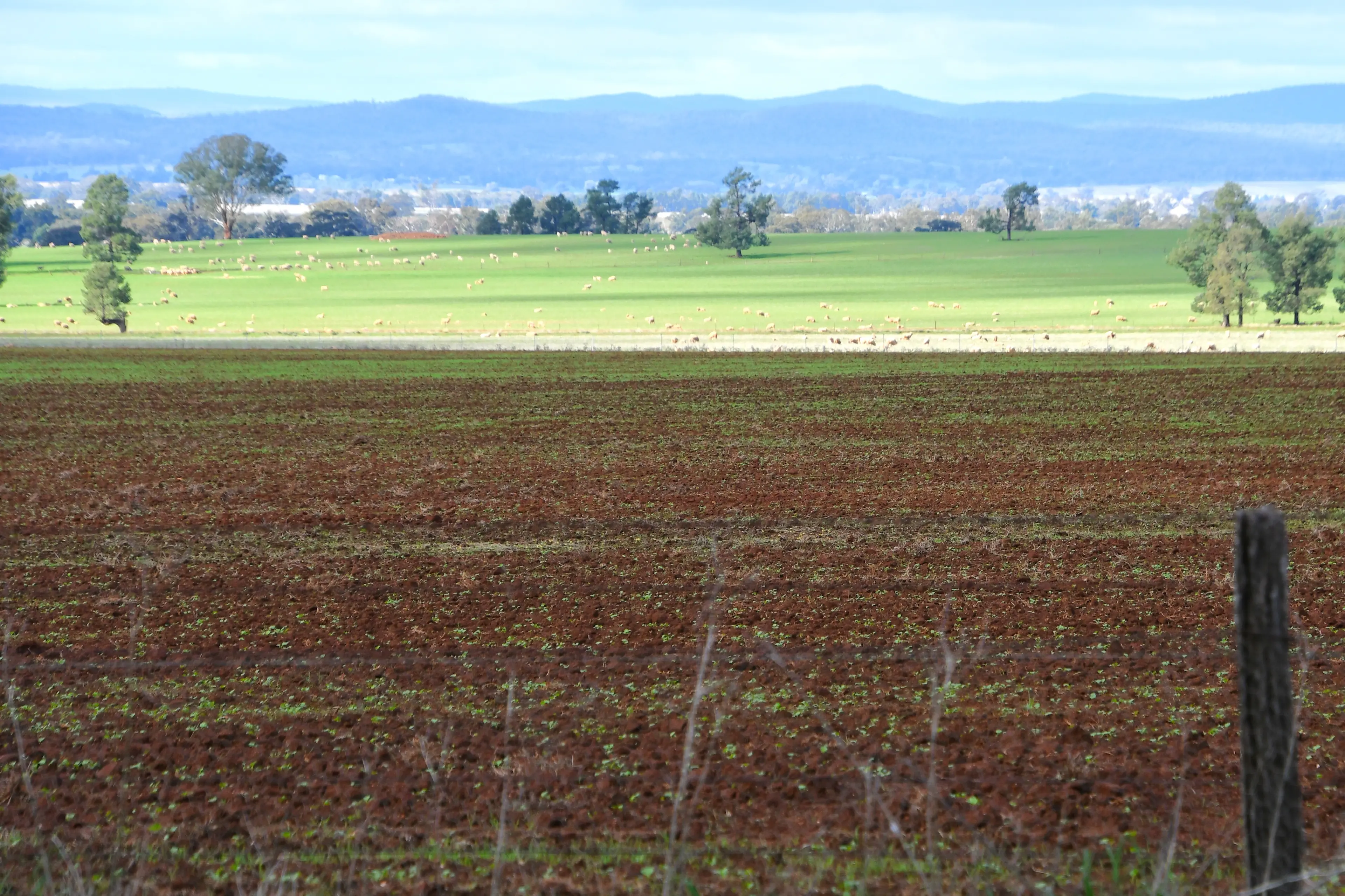
May rains have boosted croppers’ confidence across the central west.
With rainfall totalling just shy of four inches to five inches across our readership area in the past four weeks, Forbes-based agronomist Phil Gray says the season has well and truly turned around from early expectations.
Just a month ago a bone-dry April, combined with fuel pricing and fertiliser supply uncertainty, meant producers were facing difficult decisions about how much to invest in this year’s winter cropping program.
While there were those who sowed to their program by the calendar, many were adjusting their plans.
“The amount of moisture we’ve got now, we’re still within the sowing season, so a lot of farmers have turned around and started to sow,” Mr Gray said.
“Early sown cross such as lupins and canola have definitely been reduced from what would have bene planned, barley has definitely taken up a fair swag of that area.”
Based on airport records, Forbes had just over four inches of rain for the month – with 53mm over 4 and 5 May, 38mm on 18 and 19 May, and another 10mm in the last week.
Parkes airport has recorded nearly five inches for the month, with a total 123.2mm spread across those same rain events.
Cowra airport has recorded 116.4mm for the month, Grenfell 104.6mm, and Young 93.6mm.
Considerations will now be returning to the need for nitrogen input, Mr Gray said, with an eye on the grain markets and the return on investment for nitrogen applied.
“A lot of the crops are only just coming out of the ground so our yield potential’s still very variable at the moment,” he said.
“The next thing we’ve got to look at is what’s our limiting factor: soil moisture probably isn’t our limitation, our date of sowing might have reduced our yield potential, but then is it our fertiliser program to be the next thing.”
The mixed weather conditions and higher input costs have led Rabobank to predict a reduced winter crop in its 2026/27 Australian Winter Crop Forecast.
The specialist agribusiness bank estimates Australia’s winter cropping area will come in at 23.1 million hectares for the season – down eight per cent on last year and 4.3 per cent below the five-year average.
The decline in cropping area is forecast to come at the expense of wheat, with the nation’s wheat planting estimated to be down by a substantial 20.4 per cent on last year to 9.8 million hectares, according to the annual outlook, by the bank’s RaboResearch division. This is 24 per cent below the five-year average.
Barley, canola and pulse plantings are forecast to increase on last year’s area, with these commodities offering growers potentially stronger margins than wheat, according to report author, RaboResearch senior grains and oilseeds analyst Vitor Pistoia.
RaboResearch expects Australia’s grain growers to plant 5.1 million hectares of barley this year, up 4.1 per cent on last year and 14.6 per cent above the five-year average.
Mr Pistoia says barley markets remain supported by resilient feed demand, both domestically and across key export markets in Asia and the Middle East. “While global barley stocks remain comfortable following strong 2025 production, tightening supply prospects and steady livestock demand are expected to provide a price floor,” he said.
Area planted to canola this year is projected to be up 8.5 per cent on last season to 3.7 million hectares (7.6 per cent above the five-year average).
The broader oilseed market globally is supported by strong demand linked to biofuel policies and elevated energy prices, which is keeping canola stocks in check, RaboResearch said.
The expected expansion in canola cropping area in Australia reflected “improved relative returns compared with wheat” as well as favourable early-season moisture, particularly in Western Australia and South Australia, Mr Pistoia said.
“While this additional supply may temper local price upside at harvest, canola continues to benefit from rising global energy prices and biofuel mandates,” he said.
Australian growers are forecast to plant approximately 3.5 million hectares of area to pulses this season (including chickpeas, lentils, lupins, peas and faba beans). This is up slightly (by 0.7 per cent) on last year, but 42.3 per cent above the five-year average.
Mr Pistoia said India remained the key “swing factor” in global pulse markets, with expectations of higher Indian import duties, which had been priced into markets in late 2025, yet to materialise.
Global pulse area was likely to expand this season, he said, although at a slower pace than last year.
“A developing El Nino raises the likelihood of lower yields both here on Australia’s east coast, but also in South Asia,” Mr Pistoia said. “As a result, we expect prices to remain range-bound, as renewed demand faces headwinds from weaker currencies in key importing countries and higher freight costs, reducing importers’ purchasing power.”
For wheat, the RaboResearch report said, new pricing dynamics were emerging as production is about to drop in Australia and globally.
“The global wheat market is shifting from a well-supplied 2025 to a more constrained balance in 2026,” Mr Pistoia said, “driven by higher input costs, weaker profitability and emerging weather risks.”