
On 3 February 2026, the Reserve Bank of Australia announced a surprise cash rate hike to 3.85 percent. The announcement came at 2:30 pm after its policy meeting, bringing the widely anticipated rake hike. The 25 basis points hike marks the first in over two years, with the last upward review coming in November 2023.

Inflation Forces RBA Into Rate Hike, Impacts Markets
Australia’s stubborn inflation has cast a shadow over its economic growth since 2023; high inflation saw the CPI reach 7.4 percent in January, down from 8.4 percent in December 2022. By January 2024, the CPI fell to 3.4 percent and then to 2.5 percent in January 2025, well within the RBA’s target. The inflation, however, climbed steadily from July through December 2025, forcing the RBA to hike rates this February.
Even as housing and food costs remained stubbornly high, the Australian dollar (AUD) posted strong gains in the second half of 2025. Rising precious metal prices and a widening inflation gap between Australia and other major economies gave the AUD a solid boost, leading to sharp price movements across forex trading platforms.
Why The RBA Hiked the Cash Rate
Worsening inflation is the primary driver behind the RBA’s rate hike decision. A statement by the board showed that it determined the inflationary pressure to be “beyond” temporary measures and was “uncertain” that financial conditions would remain restrictive enough. The inflation is now broad-based, as seen in rents, electricity, insurance, and services.
Stronger-than-expected private-sector demand also contributed to the rate hike decision. Australia’s private sector is recording an increase in demand, increased investment in AI infrastructure, and renewed housing market growth driven by household spending. This has now pushed the economy beyond capacity constraints. The Board also considered that the inflation rate is “likely to remain above target for some time,” so there is a possibility of further hikes.
Impact on Australian Markets
The RBA’s recent rate hike sent ripples through the markets. In the forex market, the AUD jumped 1.1 percent immediately following the announcement and has maintained its strong position against the USD as the markets close for the week.
Where the currency market was optimistic, the stock market reacted cautiously; the ASX 200 first traded before wiping off intraday gains as Australian investors took profits quickly. The ASX has since stabilised, and is up 3.40 percent over the last month.
In the banking and mortgage market, major lenders anticipated the rate hike and quickly pushed on the 0.25 percent increase to home loan rates. The new rates took effect on 13 February 2026, pushing loan demands higher as borrowers applied before the 13th.
What it Means for Borrowers and Investors
The interest rate hike will impact borrowers and investors differently, based on their market position. While borrowers will see higher borrowing costs, investors, especially in cash and bank deposits, may see higher returns.
Borrowers Brace for Higher Costs
Australia’s borrowing costs were on a decline in 2025 following the RBA’s rate cuts, bringing relief to households. In early 2025, car loan rates ranged between 5.25 percent and 8.75 percent, while average mortgage interest rates were around 5.49 percent per annum (p.a.).
Australia’s borrowing costs are set to increase for mortgages and loans. Variable-rate borrowers face immediate increases, which could see a $500,000 mortgage payment rise by about $80 per month. As lenders push the increase onto borrowers, small business owners seeking loans will have to pay higher rates and will eventually pass the cost onto consumers.
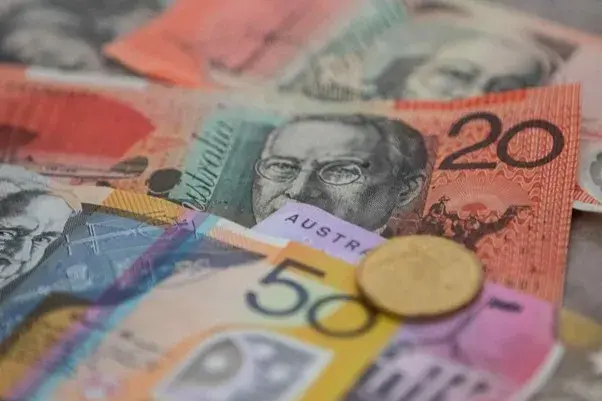
Westpac, Macquarie, and other major banks have also added 0.25 percent to variable loans, while ANZ increased fixed rates by up to 0.50 percent. Overdraft rates have also increased by 0.25 percent p.a. across lenders.
For borrowers, the interest rate hike means higher repayments, lower borrowing power, and refinancing risks. This could slow down private demand and spending in the coming months
Markets Could Yield More Returns for Investors
Investors face an increased risk or opportunity depending on their portfolio. The property market investors may see lower buyer urgency, while money market traders may see improved returns on cash and bank deposits. Short-term volatility in the stock market is expected, but the volatility will normalize as sectors adjust to higher costs. This is not so bad for the financial markets, as short-term volatility is always priced in.
Another impact of the rate hike, especially with the possibility of more hikes, is the reduction in overall business investments. This is because businesses may adopt more conservative inventory plans due to higher financing costs and anticipated lower demand. The effect is a broader slowdown in economic activity as well as a shakeup in the job markets.
For currency traders, the AUD is still holding against the USD, reaching 0.7050–0.7060 as of mid-February. Although this upward move is more about the dollar weakening, the AUD is still up by 10 percent over the last past year.
Future Hikes? Australia's Economic Forecast
The rate cut decision not only reflects the RBA’s cautionary approach but also a market-wide sentiment as markets respond. There is a high chance of another hike in the third quarter of the year if inflation remains high.
Australia's economic fortunes are positive for the year, as forecasts put economic growth between 2.1 percent and 2.3 percent. However, the economy will need to continue operating at near its full capacity, and private spending and domestic consumption will be key to maintaining a steady growth pace. The Australia-China trade partnership will be a crucial watch for the year as market diversification takes a more prominent role in global trade.

How the Cash Rate Could Shape 2026
The 3.85 percent cash rate may have increased costs for borrowers, but lenders and investors have more opportunities for higher returns. A temporary lull in borrowing is normal, yet a full return may be in order as businesses secure funding to expand their operations in 2026. The RBA’s reluctance to hike interest rates may be tested further this year.