
PHOTO
Local fuel prices were slower to rise than many other areas but the upward pressure following conflict in the Middle East was being seen by the start of this week.
On Tuesday morning, local drivers could still fill up with E10 for 202.9 cents a litre, but the cheapest was 211.9 by Wednesday morning, 11 March.
At the same time last week, motorists could still fill up locally with unleaded for 175.9 cents per litre – although media in towns as close as Young reported prices had risen 50c a litre at that point.
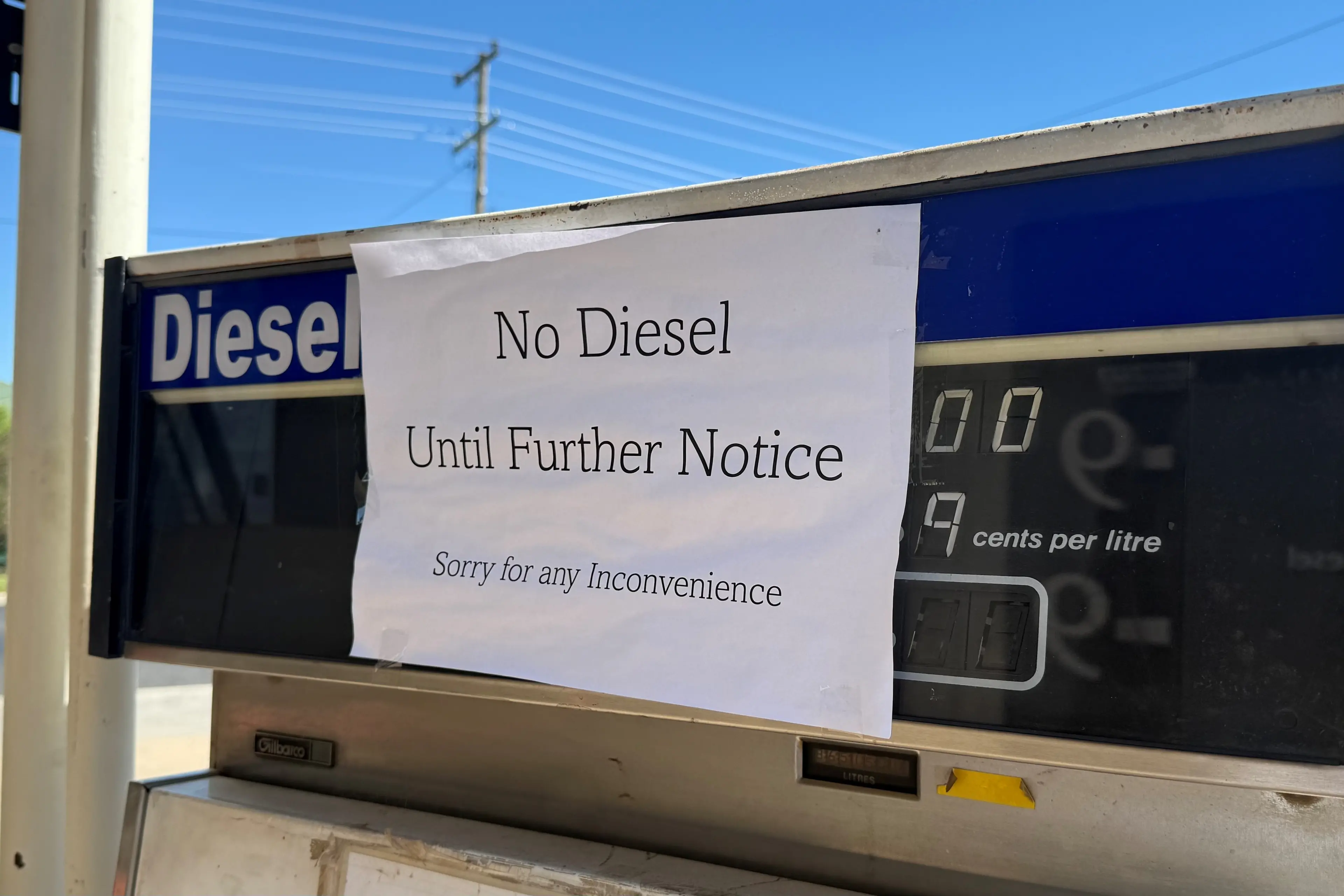
Diesel was 247.9 and 248.9 cents per litre by Wednesday, 11 March.
The impact of pressure to beat the price rises is being felt - with immediate impact on local business and farmers looking to start getting crops in on the back of rains.
Independent retailer Loomzy’s, who had the lowest price fuel last Wednesday, sold out of diesel first, then unleaded.
By Tuesday, they were sold out of all fuel – although busy in the workshop and still welcoming customers for all their fishing and boating gear, plus drinks and food.
Jamie Loomes said he put an order in for fuel last Thursday, and was told there would be a wait. With a few more phone calls, he was assured suppliers wouldn’t let him run out of fuel.
“Friday afternoon I got a call saying sorry we can’t supply you until further notice,” he said.
Updated: In good news, Loomzy's received a delivery of fuel on Friday.
It’s a similar story at Nicholson Petroleum, where Richard Smith would typically be delivering fuel to farms.
“We’ve had orders in but since this started they’ve stopped delivering to us,” he said.
That’s meant they haven’t been able to deliver to farmers wanting to get early dual-purpose crops in to grow feed on the back of the rains – or even just keep their pumps and bores running.
With the message from the federal government that there is no shortage of fuel, Federal Member for Parkes Jamie Chaffey is calling on them to intervene to ensure security of fuel supply to farmers and regional areas.
“Planting is about to start across the electorate of Parkes and elsewhere but without diesel, it won’t happen. And how do farmers get their livestock to market?" Mr Chaffey said.
“No diesel equals no crops and livestock. No crops equals no food, no income and no jobs. And when that supply drops, prices will of course surge – even in the city.
“Farmers should not be facing this level of impact so early in this conflict.
“But more immediately, why hasn’t action already been taken? The Nationals are calling on the Government to provide farmers with guaranteed access to necessary fuel supplies so they can keep producing the food that our country needs.
Federal Minister for Climate Change and Energy Chris Bowen said there’s no need to panic-buy.
“Supply of diesel and petrol continues to arrive in Australia as expected and our back up reserves remain in place,” Mr Bowen said.
“We know however that Australians are concerned and that a huge increase in demand for diesel has seen shortages in regional Australia.”
The government hosted a roundtable on Tuesday to bring stakeholders together, including the National Farmers Federation.
President Hamish McIntyre said discussions reinforced the importance and agriculture and the food supply chain being front of mind in decisions about fuel supply and distribution.
“Farmers rely on fuel to get food and fibre from paddocks to plates and ports every single day,” he said.
“As we move into the winter cropping season, demand for diesel naturally increases as farmers prepare paddocks and plant crops.”
Mr McIntyre said the situation underlined a broader challenge.
"We believe the Government must explore all options to better understand and protect local food and fibre production from vulnerabilities such as global conflict," he said.
"We expect the forthcoming national food security plan to address exactly that.
"The NFF also strongly supports growing domestic manufacturing capability, including a local biofuels industry.
"A domestic low-carbon liquid fuels industry would provide economic benefits and diversification opportunities for farm businesses, while also strengthening Australia’s long-term sovereign fuel capability."